Lending Library
STEAM 4 Kern is Kern County’s first and only science education lending library program designed specifically for local students. This innovative program provides teachers and expanded learning programs with access to high-quality science kits that make learning exciting, hands-on, and impactful. By offering a variety of engaging resources, STEAM 4 Kern is helping to strengthen science education across the county and ensure that students have opportunities to explore real-world scientific concepts.
Each kit includes lab materials, teacher lesson plans, student notebooks, and engaging presentations. The STEAM 4 Kern kits can be checked out for a month and will be delivered and picked up at your school site. The activities included in the STEAM 4 Kern kits are hands-on and aligned with the Next Generation Science Standards (NGSS). Best of all, these science kits are provided at NO COST to classrooms and expanded learning programs throughout Kern County. STEAM 4 Kern is making high-quality, standards-based science education accessible and equitable for all students, empowering the next generation of thinkers, innovators, and problem solvers.
New! Kern County students now have access to free technology tools to support their learning. Teachers can check out these tools for up to one month, making it easy to bring technology into the classroom. Each tool comes with clear instructions and a care information sheet to ensure proper use. *Some technology tools will need teacher training before they are checked out.
Lending Library Registration Form
STEM Tools Library
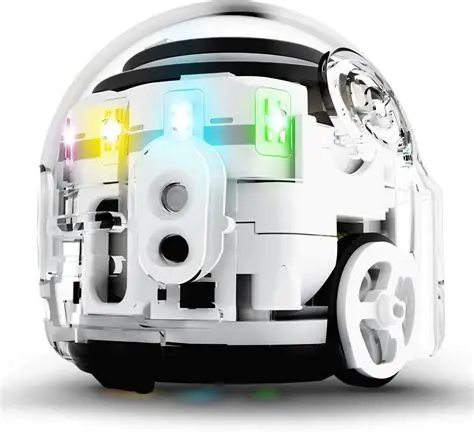
Ozobots
Ozobots are small, interactive coding robots that introduce students to programming through fun and creative activities. The set includes 12 robots, 8 sets of markers for color coding, and an informational sheet to guide teachers and students in using them effectively. These tools make learning coding concepts engaging and hands-on.
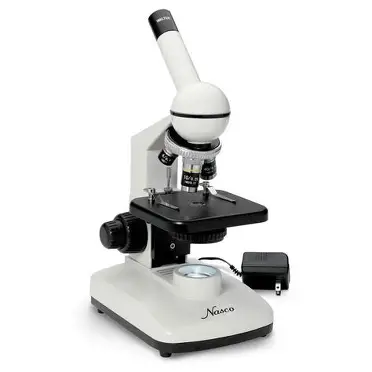
Microscopes
The microscope set includes 8 microscopes that allow students to explore the microscopic world up close. These tools give learners the opportunity to observe cells, tissues, and other tiny structures, making science lessons more engaging and hands-on.
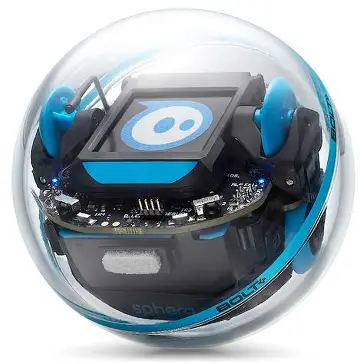
Sphero Bolt
The Sphero BOLT set includes 12 programmable robots and an informational sheet to help guide classroom use. Compatible with iPads, these robots allow students to learn coding, problem-solving, and creativity through interactive play. With features like a programmable LED matrix, advanced sensors, and endless activity possibilities, Sphero BOLT makes STEM learning exciting and hands-on. *Teachers will need to receive training before checking out this tool.
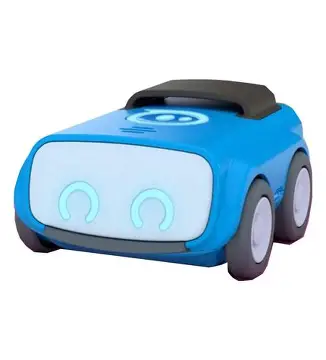
Indi Sphero
The Indi Sphero set includes 8 easy-to-use robots and an informational sheet to support classroom activities. Designed for younger learners, Indi introduces students to the basics of coding and problem-solving through color-coded tiles and interactive play. These robots encourage creativity, exploration, and collaboration in a fun, hands-on way.
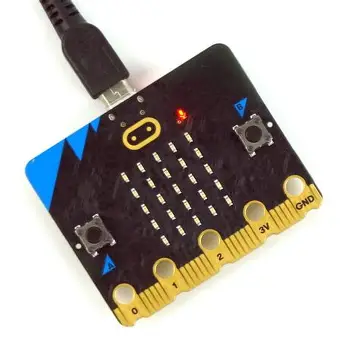
Microbits
The Micro:bit set includes 10 programmable devices and an informational sheet to guide classroom use. These pocket-sized computers introduce students to coding, electronics, and problem-solving through fun, interactive projects. Compatible with Chromebooks, Micro:bits can be programmed to create games, display messages, or even control other devices.
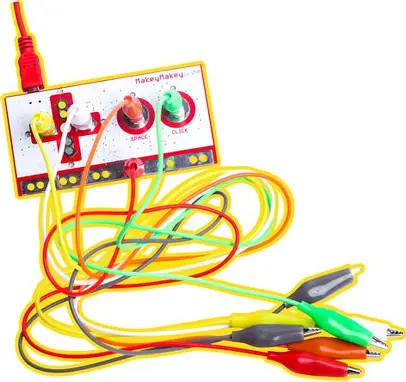
Makey Makey
The Makey Makey set includes 8 kits and an informational sheet to help teachers and students get started. With Makey Makey, everyday objects can be turned into touchpads, allowing students to explore circuits, conductivity, and creativity in a fun and interactive way.
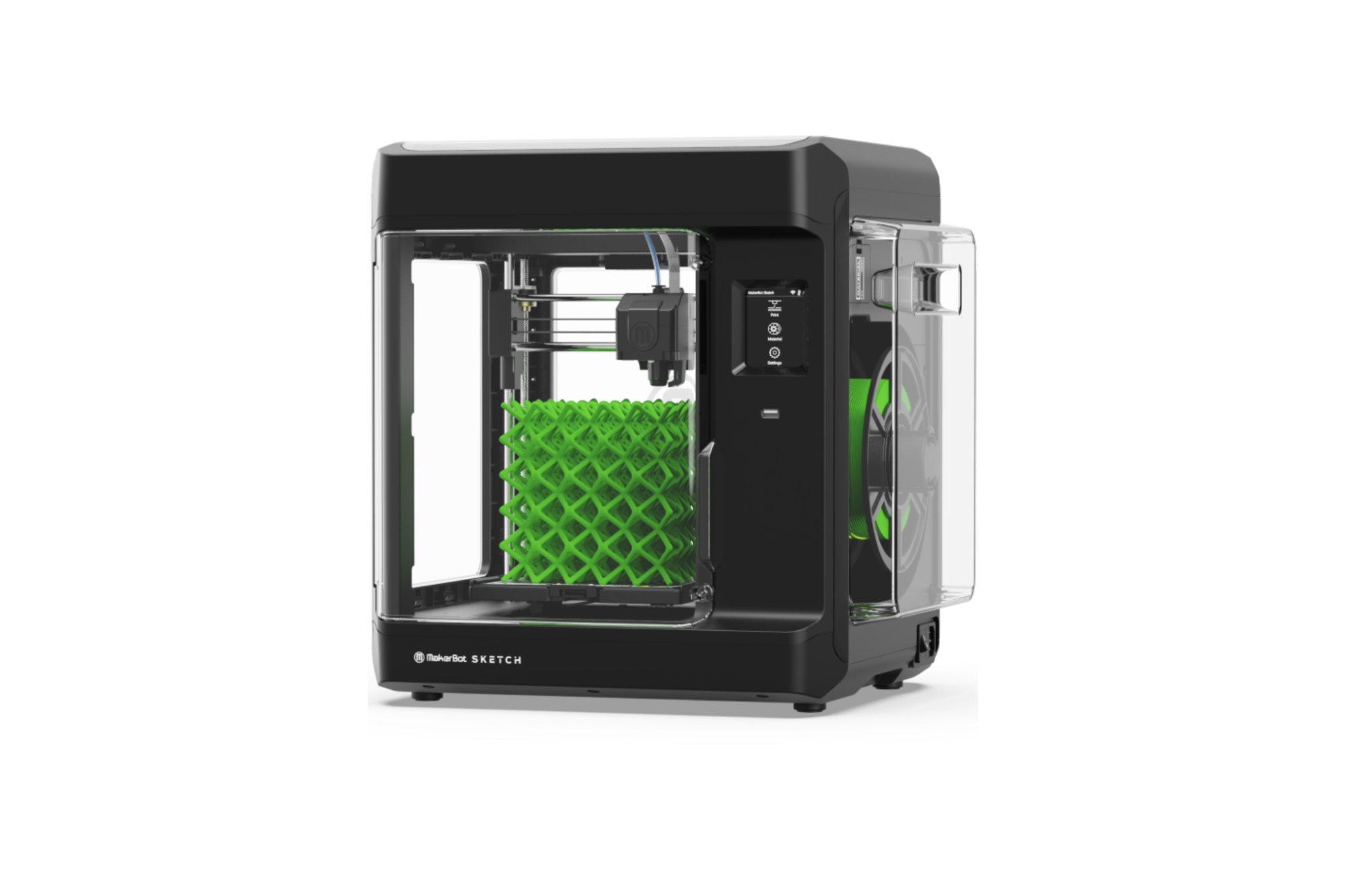
3D Printer
The 3D Printer (Makerbot) set includes a classroom-ready printer, a roll of filament, and an informational sheet to guide safe and effective use. With this tool, students can bring their designs to life by creating three-dimensional models, prototypes, and projects. The 3D printer encourages creativity, engineering, and problem-solving while helping students explore real-world applications of STEM. *Teachers will need to receive training before checking out this tool.
Simple circuits, series circuits, parallel circuits, wind energy and solar energy are examined in this unit of study. Buzzers, light bulbs, and fans become part of the circuits, helping students understand how energy transforms to sound, light, and motion energies. Students will use alligator clamps to quickly construct these circuits, thus creating success and a positive attitude. Each kit includes a powerpoint, materials for all hands on activities, and teacher lesson plans. A lesson plan timeline averaging 40 minutes, but can easily be broken into smaller sessions. All lessons are organized to enable the teacher to maximize contact time with the students and minimize preparation time.
WHAT’S INCLUDED
Lesson #1— Electrical Energy
Lesson #2 — Wind Energy
Lesson #3 — Solar Energy
Lesson #4 — Engineering Design Project
NGSS Performance Expectation(s):4-PS3-2
Students will get to explore a variety of physical systems where they can physically feel forces. Some forces are strong and some are weak and some cause motion to start. Students will investigate situations to illustrate when multiple forces act on an object at once. A lesson plan timeline averages 40 minutes, but can easily be broken into smaller sessions.
WHAT’S INCLUDED
Lesson #1 — Amazing Magnet Force
Lesson #2 — Balanced and Unbalanced Forces
Lesson #3 — Patterns in Motion
Lesson #4 — Engineering Design Project
NGSS Performance Expectation(s): 3-PS2-1, 3-PS2-3
Kids love rocks and fossils! This unit incorporates students using a hand-lens to explore, sort, and classify rocks and fossils. Students experience a hands-on comparison between igneous and sedimentary rocks and their metamorphic rock counter-parts. Students will learn that even though a fossilized organism is long extinct, it may show evidence of the same adaptations as those found in modern plants and animals. All lessons are organized to enable the teacher to maximize contact time with the students and minimize preparation time. A lesson plan timeline averages 40 minutes, but can easily be broken into smaller sessions.
WHAT’S INCLUDED
Lesson #1 — Fossils
Lesson #2 — Rock Types
Lesson #3 — Rocks and Fossils
NGSS Performance Expectation(s): 3-LS4-1, 4-ESS1-1
How do water, wind, gravity, and temperature play a role in erosion? In four interactive lessons, students will wear safety goggles to demonstrate the forces of wind and the movement of water in the transportation and deposition of weathered rock. Distinction between mechanical and chemical weathering will be made through a lab activity involving water, salt water, vinegar, and chalk. If a freezer is available, the students will be able to experience how freezing and thawing is an active part of weathering. Using a set of plastic bins and sand, students will create sand dunes, build rivers, model landslides, and demonstrate earthquakes. All of these lessons involve the use of water, therefore a protective tarp will be provided for each small group, but working outdoors is highly encouraged. A lesson plan timeline averages 50 minutes, but can easily be broken into smaller sessions. All lessons are organized to enable the teacher to maximize contact time with the students and minimize preparation time.
WHAT’S INCLUDED
Lesson #1 — Amazing Magnet Force
Lesson #2 — Balanced and Unbalanced Forces
Lesson #3 — Patterns in Motion
Lesson #4 — Engineering Design Project
NGSS Performance Expectation(s): 4-ESS2-1
The shape of different beaks in ecosystems begin this unit of study. Discussion of which types of food the beaks collect best helps to reinforce how adaptations are made within a habitat. Examination of how seeds are dispersed through plant adaptations. Hands-on inspection of different seeds helps students to understand that even seeds have adapted for easy dispersal throughout the ecosystem. Both physical and structural adaptations are explored through the reading of the book, What Color is Camouflage?
WHAT’S INCLUDED
Lesson #1 — Bird Beaks
Lesson #2 — Seed Dispersal Lab
Lesson #3 — Camouflage
NGSS Performance Expectation(s): 3-LS4-2
Energy on Earth begins with our Sun. Sunlight is the catalyst to photosynthesis and the promise of continued growth of producers, the first in line of an ecosystem’s multiple food chains. This three lesson unit of study uses role-playing to stimulate students in their understanding of food chains and photosynthesis. A string game is used to simulate food webs helping students to visualize the connection between the Sun’s energy, producers, herbivores, omnivores, carnivores, and decomposers.
WHAT’S INCLUDED
Lesson #1 — Plants and Energy
Lesson #2 — Animals and Energy
Lesson #3 — De-composers
NGSS Performance Expectation(s): 5-LS2-1
Matter is everywhere! Matter surrounds you at all times! Matter is described as anything that has mass and takes up space. In this five lesson unit, students will discuss and observe the five phases of matter, density, viscosity, and conservation of mass. They will distinguish between matter’s chemical changes and matter’s physical changes. Homogeneous mixtures and heterogeneous mixtures will be created and separated using gravity and filtering. To end the unit, examples of solution, solute, solvent, and solubility will be the focus. Every lesson enables teachers and students to develop and apply words found on the current CAST science test and in the Next Generation Science Standards. A lesson plan timeline averages 40 minutes, but the lessons can easily be broken into smaller sessions. All lessons are organized to enable teachers maximum contact time with students and minimum preparation time.
WHAT’S INCLUDED
Lesson #1 — What is Matter?
Lesson #2 — Chemical Changes
Lesson #3 — Physical Changes
Lesson #4 — Mixtures
Lesson #5 — Solutions
NGSS Performance Expectation(s): 5-PS1-1, 5-PS1-2, 5-PS1-4
The Scientific Method is a five-lesson unit of study that allows students to develop and practice an organized pattern of thinking when investigating science. Students analyze collected data and draw conclusions while completing three different experiments. The Scientific Method is math rich with recording of data, finding the median, and using tools that measure. A lesson plan timeline averages 55 minutes, but can easily be broken into smaller sessions. All lessons are organized to enable you, the teacher, to maximize contact time with your students and minimize preparation time.
WHAT’S INCLUDED
Lesson #1 — Favorite Ice Cream
Lesson #2 — Soil and Water Part 1
Lesson #3 — Soil and Water Part 2
Lesson #4 — Sled Pull Part 1
Lesson #5 — Sled Pull Part 2
Gravitational Force is a four-lesson unit of study that allows students to support an argument that the gravitational force exerted by Earth on objects is directed down. In lesson #1, students investigate the ideas: gravity causes objects to fall, why objects fall, and how air resistance affects falling objects. In lesson #2, students do internet research to understand how parachutes work. In lesson #3, students complete an activity, which leads them to understand parachutes slow the speed at which an object falls through the air. In lesson #4, students use what they have learned about gravity, air resistance, and parachutes to design, build, and test a space lander.
WHAT’S INCLUDED:
Lesson #1 — Do objects fall at the same speed?
Lesson #2 — Internet Research
Lesson #3 — Space Lander
Lesson #4 — Engineering Design Project
Waves and Their Applications is a four-lesson unit of study that allows students to develop a model of waves to describe patterns in terms of amplitude and wavelength and that waves can cause objects to move. In lesson #1, students investigate whether waves carry energy and explore different types of waves. In lesson #2, students gain an understanding that light reflecting from an object and entering the eye allows objects to be seen. In lesson #3, students use materials and tools to design and build a device that uses light or sound to solve the problem of communicating over a distance. In lesson #4, students use what they have learned about waves to design, build, and test a musical instrument.
WHAT’S INCLUDED
Lesson #1 — What are Waves?
Lesson #2 — Light Waves
Lesson #3 — Wave Patterns
Lesson #4 — Engineering Design Project
NGSS Performance Expectation(s): 5-PS1-1, 5-PS1-2, 5-PS1-4
This unit introduces the engineering process to students. It’s a great tool to use before diving into a NGSS Performance Expectation which incorporates the engineering design process. The engineering design process is a series of steps that engineers follow to come up with a solution to a problem. Many times the solution involves designing a product (like a machine or computer code) that meets certain criteria and/or accomplishes a certain task. This process is different from the Steps of the Scientific Method. If your project involves designing, building, and testing something, you should probably follow the Engineering Design Process.
WHAT’S INCLUDED
Lesson #1 — Ask and Imagine
Lesson #2 — Plan and Create
Lesson #3 — Test and Share
Lesson #4 — Improve
NGSS Performance Expectation(s): 3-5ETS1-1, 3-5ETS1-2, 3-5ETS1-3
he makerspace kits are designed to provide the appropriate form of engineering for elementary students.The provided manipulatives and task cards are designed to be INTERCHANGEABLE, meaning students can use any material to build any task card. They can combine the materials in limitless ways and even create their own play scenes, inventions, and structures. Children may use the provided write and wipe blueprint card to sketch ideas for their structures and the questions on the back will help them challenge themselves to take their ideas to the next level.
WHAT’S INCLUDED
8 group Makerspace kits for 1 classroom
NGSS Performance Expectation(s): K-2 & 3-5ETS1-1, K-2 & 3-5ETS1-2, K-2 & 3-5ETS1-3